



2026-11-11
Holiday beverage demand creates little room for delays at the bottling line. A missed cap-material delivery, inconsistent coating, or poor forming performance can hold finished wine, spirits, olive oil, or syrup inventory until the sales window has passed.
Aluminum sheet for ROPP caps is a practical holiday-season packaging solution because it supports roll-on pilfer-proof closures that provide resealability and visible evidence of opening. For producers supplying year-end celebrations, New Year promotions, gift packs, and Lunar New Year distribution, the priority is not simply purchasing metal. It is specifying cap stock that runs predictably on the intended shell-making and capping equipment.
ROPP closures are formed around the bottle finish during capping. The cap skirt is rolled to create threads, while the pilfer band is formed to provide tamper evidence. This operation places strong demands on strip consistency, surface quality, lubrication, coating adhesion, and dimensional control.
A material order should therefore begin with the finished closure and line conditions, not only a requested alloy name. Aluminum alloy 8011 is commonly used for closure stock, but the final temper, thickness range, coating system, and surface treatment must be validated for the specific cap design and conversion route.
Use this specification checklist before releasing a holiday-season order:
| Item to confirm | Why it matters for ROPP caps | Evidence to request |
|---|---|---|
| Alloy and temper | Determines forming behavior during shell drawing and thread rolling | Mill test certificate and agreed material specification |
| Thickness tolerance | Helps maintain consistent shell geometry and capping performance | Thickness measurement report across coil width |
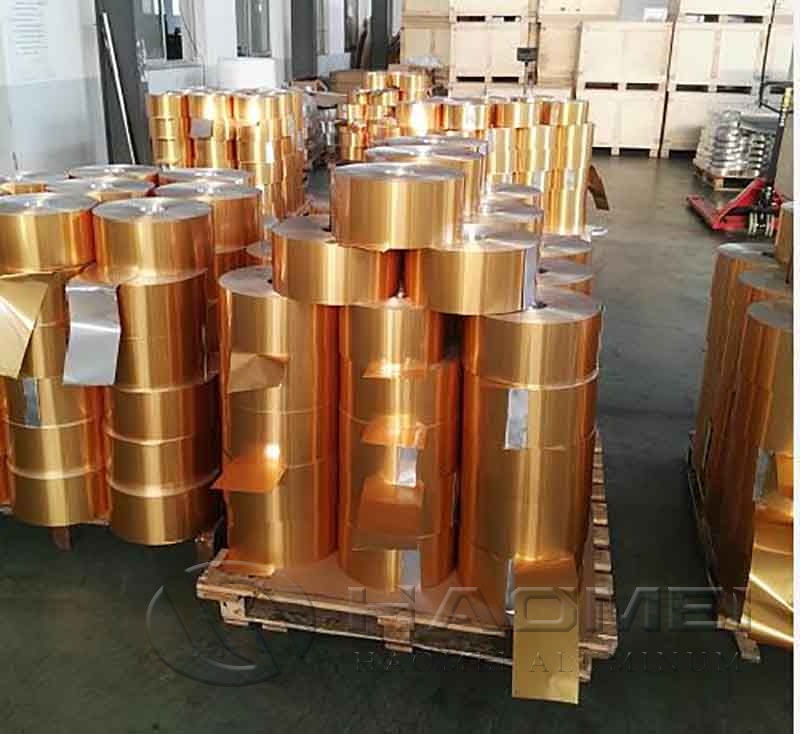
| Width, coil ID, and coil weight | Must suit slitting, press capacity, handling, and feeding equipment | Packing list and coil-data sheet |
| Surface cleanliness | Reduces risks of coating defects, print variation, and contamination | Surface inspection standard and sample approval |
| Lacquer or coating system | Supports adhesion, product-contact compatibility, and decoration | Coating technical data and compliance declaration where applicable |
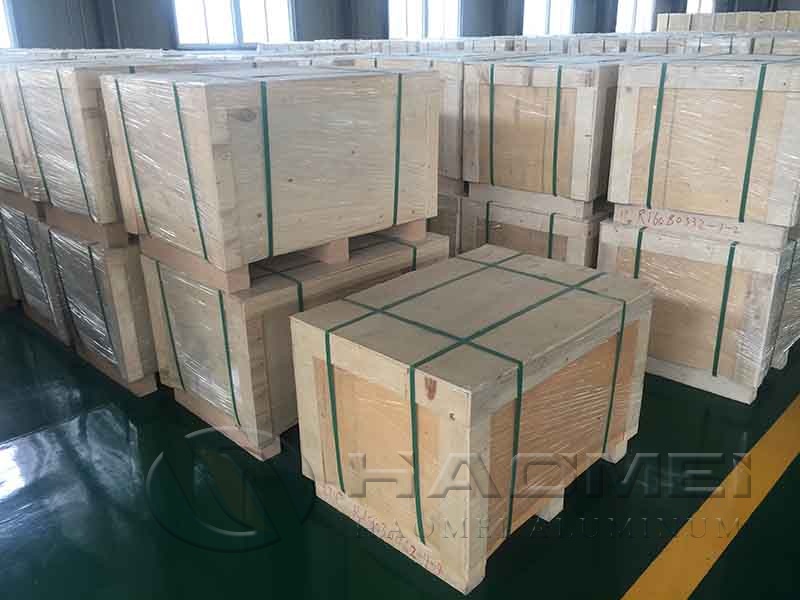
| Packaging protection | Limits edge damage, moisture exposure, and transit scratches | Export packing specification and loading photos |
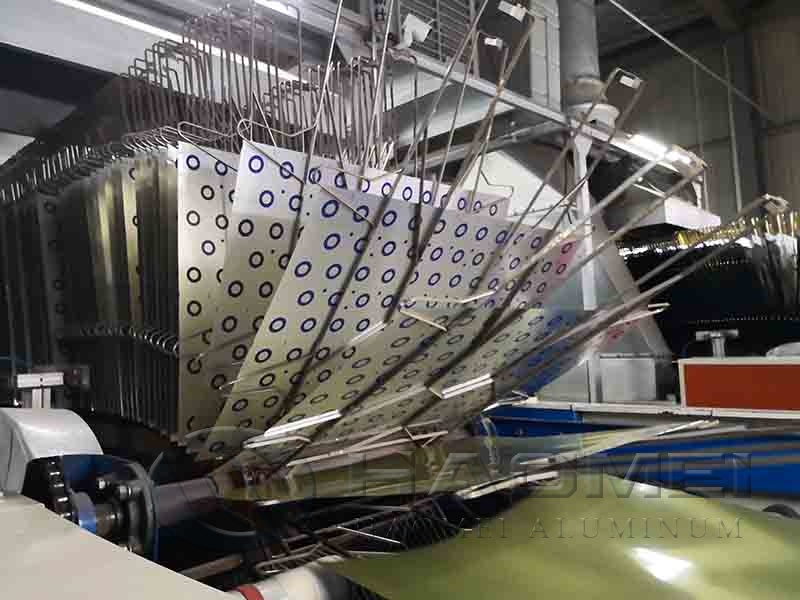
For uncoated material, specify the required mill finish and surface quality clearly. Plain Aluminum stock can be appropriate where a converter applies its own coating, printing, or embossing process. If the cap will be decorated before forming, confirm that the coating and ink system can tolerate deformation without cracking or loss of adhesion.
Holiday packaging often moves across markets, especially for gift spirits, imported wines, and premium food products. The aluminum substrate is only one part of the compliance picture. Coatings, inks, lubricants, and the finished closure construction also require review according to the product and destination market.
For food-contact applications sold in the European Union, Regulation (EC) No 1935/2004 establishes the general requirement that food-contact materials must not transfer constituents in quantities that could endanger health, unacceptably change food composition, or deteriorate organoleptic characteristics. Regulation (EC) No 2023/2006 sets good manufacturing practice requirements for materials and articles intended to contact food.
In the United States, food-contact status is assessed under applicable U.S. Food and Drug Administration requirements for the specific substances and intended use. Do not treat a generic material statement as proof that a complete printed or lacquered cap is suitable for every beverage. Request supporting declarations for the actual coating system and intended product contact conditions.
For pharmaceutical or regulated medicinal products, tamper-evident packaging has separate requirements. In the U.S., 21 CFR 211.132 addresses tamper-evident packaging requirements for certain over-the-counter human drug products. A standard ROPP closure may be part of a package design, but the finished package must be assessed against the relevant product regulation rather than assumed compliant because it includes a pilfer band.
Ask suppliers to provide documentation that can be checked by your quality and regulatory teams:
The most expensive issue in a seasonal cap program is often not the raw-material price. It is the cost of a line interruption, rejected decorated stock, or late release after a brand approval change. Prevent that risk by working backward from the planned filling date.
| Planning stage | Action | Decision owner |
|---|---|---|
| Bottle and closure confirmation | Lock bottle finish, cap diameter, skirt height, liner, and tamper-band design | Packaging engineering |
| Material qualification | Run shell-forming and capping trials using representative stock | Converter and bottling team |
| Decoration approval | Approve color, gloss, registration, and scratch resistance against physical samples | Brand and quality teams |
| Compliance review | Verify documents for the filled product and destination market | Regulatory or quality team |
| Production release | Confirm coil quantity, split shipments, packaging, and inspection criteria | Supply chain team |
| Arrival control | Inspect coil labels, edge condition, moisture protection, and documentation before use | Warehouse and quality teams |
A useful purchase order should state measurable acceptance criteria. Avoid descriptions such as "good forming quality" or "standard surface." Instead, identify the agreed thickness range, width tolerance, alloy and temper, coil dimensions, coating side, color reference, inspection method, packing arrangement, and documentation required with shipment.
For a year-end or New Year bottling campaign, reserve time for one representative production trial before approving the full run. Include the actual bottle finish, capping head settings, liner, and decorated cap construction whenever possible. This reveals whether thread definition, bridge formation, torque performance, and visual appearance remain acceptable at normal line speed.
A reliable ROPP cap-stock program turns a seasonal deadline into a controlled production plan. Define the material around the closure design, verify coating and market requirements, approve physical samples early, and make traceability part of the shipment requirement. Those steps help keep premium bottles moving from filling line to holiday shelf on schedule.
Tags: Aluminum sheet for ROPP caps | ROPP cap stock |
Original Source: http://alclosuresheet.com/a/aluminum-sheet-for-ropp-caps.html

+86-15978414719


+86-15978414719


sale@alumhm.com