


2026-03-26
Holiday sales compress design, approval, and delivery into a short window. For converters and packaging plants supplying beverage, spirits, food, and personal care brands, the common problem is not only decoration. It is launching seasonal packs on time while keeping print stability, coating compliance, and downstream forming performance under control.
That is where printed alu sheet becomes a practical holiday solution.
Instead of treating decoration as a final cosmetic step, manufacturers can use pre-printed aluminum as a production-ready substrate for caps, closures, and promotional packaging parts. This reduces extra handling, shortens press-side variability, and helps seasonal artwork stay consistent across high-volume runs.
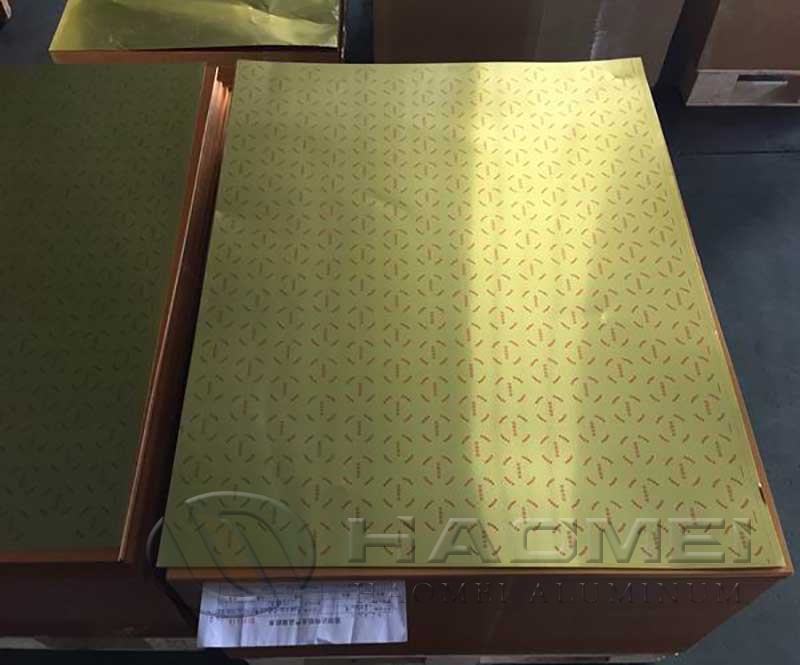
In holiday packaging, one customer concern stands above the rest: print durability during forming and capping.
Seasonal packs often use metallic inks, special colors, and short promotional windows. If the printed metal cracks, scuffs, or shifts in tone during stamping or lining, the product can miss launch dates or fail visual inspection at filling lines.
For aluminum used in closures and decorative packaging, performance depends on several controllable factors:
Alloy and temper suited to forming.
Coating system compatible with food or beverage contact requirements.
Ink adhesion strong enough for downstream conversion.
Surface cleanliness for stable print registration.
Consistent sheet flatness to reduce feeding issues.
According to the European Aluminium sector guidance and common packaging practice, aluminum is widely used in closures because it combines corrosion resistance, low weight, and formability. For food-contact applications in Europe, framework rules such as Regulation (EC) No 1935/2004 and GMP Regulation (EC) No 2023/2006 are commonly considered when selecting coating and printing systems. In the United States, food-contact coatings may also need to align with applicable FDA requirements depending on end use.
For holiday campaigns, these are not abstract compliance points. They directly affect whether printed stock can move from warehouse to press, then to shell punching, liner insertion, and capping without interruption.
The fastest way to avoid delays is to screen the material against conversion and regulatory needs before artwork approval.
| Item to confirm | Why it matters in holiday production | What to ask for |
|---|---|---|
| Alloy and temper | Affects drawability and anti-crack performance | Alloy grade, temper, forming application |
| Coating type | Influences adhesion, resistance, and compliance | Internal/external coating specs, end-use suitability |
| Print method | Determines color consistency and speed | Offset or other process, color tolerance |
| Sheet thickness | Impacts stamping and closure performance | Thickness range and tolerance |
| Surface quality | Reduces defects in graphics and feeding | Flatness, cleanliness, scratch criteria |
| Regulatory documents | Needed for audit and market access | Declaration of compliance, test reports if applicable |
| Packaging method | Prevents transit damage before conversion | Interleaving, pallet protection, moisture control |
If the application includes closures for wine, spirits, edible oil, or carbonated beverages, it is often more efficient to align printed stock with closure dimensions and conversion conditions at the quotation stage. That is why many processors review Printed Aluminum specifications together with shell diameter, embossing depth, and lining process rather than evaluating print appearance alone.
| Factor | Printed alu sheet | Unprinted stock |
|---|---|---|
| Time to market | Shorter if artwork is approved early | Extra decoration step may extend schedule |
| Design consistency | Better batch uniformity when prequalified | Depends on separate printing control |
| Handling steps | Fewer internal operations | More transfers and work-in-progress |
| Scrap risk | Lower when forming compatibility is validated | Higher if decoration is added late |
| Seasonal SKU flexibility | Good for planned campaigns | Better for undecided generic inventory |
| Visual impact | High, especially for metallic festive effects | Limited before added printing |
For holiday demand, pre-printed material usually works best when the artwork is fixed and volume is large enough to justify dedicated setup. Unprinted stock may still fit programs with uncertain graphics or mixed SKU demand, but it increases the risk of schedule compression closer to the sales season.
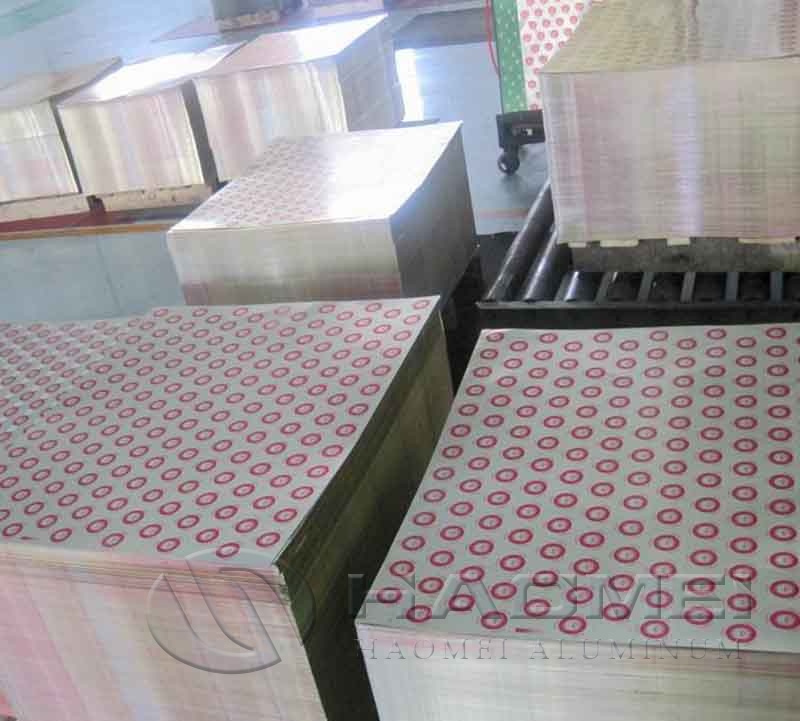
The strongest seasonal applications are those where shelf impact and production speed matter at the same time.
PP and ROPP caps for spirits and wine holiday editions.
Decorative closure shells for edible oil gift packaging.
Promotional lids and top discs for personal care sets.
Branded metal components for confectionery and festive food packs.
For cap manufacturers, pre-printed stock designed for conversion into closures can reduce mismatch between artwork approval and forming conditions. Plants that handle shell production often compare general sheet supply with specialized Printed Aluminum options intended for cap and closure applications.
Short holiday deadlines leave little room for trial-and-error. Use this sequence to reduce risk.
Lock the end use first. Define whether the material will become ROPP caps, screw caps, decorative shells, or stamped parts.
Match substrate to forming stress. Review alloy, temper, and thickness based on punch and draw conditions.
Confirm coating compliance. Request documents relevant to the destination market and product contact conditions.
Approve artwork with tolerance limits. Include color reference, gloss, and abrasion expectations.
Check packaging protection. Holiday inventory often sits briefly before rapid conversion, so edge protection and moisture barriers matter.
Run a forming validation sample. Verify no cracking, delamination, or visible print damage during production-speed trials.
Schedule around the holiday selling date. Work backward from filler demand, not from print completion.
Published global aluminum prices change daily, and primary aluminum costs are commonly benchmarked through exchanges such as the LME. Final printed sheet pricing usually depends on:
Aluminum base price.
Alloy and gauge.
Coating system.
Number of colors.
Print complexity.
Order size.
Protective packaging.
Compliance testing or documentation needs.
Because seasonal packaging has a narrow revenue window, the lowest nominal sheet price is not always the lowest operational cost. A cheaper substrate that causes press stoppages, print rejection, or cap deformation can erase margin quickly during peak demand.
| Priority question | Acceptable answer |
|---|---|
| Will graphics survive forming? | Verified by trial or comparable production history |
| Is the coating suitable for the filled product? | Supported by compliance documentation |
| Can supply timing match holiday launch? | Production and shipping window confirmed |
| Is print quality stable across batches? | Tolerance and inspection method defined |
| Is transport packaging protective enough? | Pallet and moisture protection specified |
When holiday packaging must reach market fast, printed aluminum sheet works best as a process solution, not just a decorative material. The most reliable programs are built around one requirement first: preserving graphic quality through conversion while meeting the compliance and scheduling demands of the target market.
Tags: printed alu sheet | printed aluminum packaging |
Original Source: http://alclosuresheet.com/a/printed-alu-sheet.html

+86-15978414719


+86-15978414719


sale@alumhm.com