


2026-04-29
The questions below reflect hot English search and Q&A wording seen in recent Google and other Q&A websites. The focus is practical: how aluminum closure stock behaves in cap making, how to choose alloy and temper, and how to reduce forming defects before mass production.

| Recent question people ask | What they usually want to know | Short answer |
|---|---|---|
| What grade of aluminum is used for bottle caps? | Alloy choice | 8011 and 3105 are common; 5052 is used where higher strength is needed. |
| Is closure stock different from normal sheet? | Material reliability | Yes, cap stock has tighter control on thickness, surface, coating, and formability. |
| Which temper is best for PP or ROPP caps? | Forming performance | H14, H16, H18, and H24 are selected by cap size and forming depth. |
| Can printed coil go straight to cap making? | Process flow | Yes, if coating, ink, and curing match the cap line. |
| How do I avoid cracks and coating peel? | Scrap reduction | Match alloy, temper, lubricant, tooling, and curing conditions. |
For aluminum bottle cap material, the most common commercial choices are 8011 and 3105. Alloy 8011 is widely used because it balances ductility, strength, and surface quality. It is suitable for pilfer-proof caps, roll-on pilfer-proof caps, wine closures, medicine vial seals, and beverage closures.
Alloy 3105 offers higher strength than some soft packaging alloys and is often chosen for caps that need better rigidity after forming. For special closures, especially those exposed to higher mechanical stress, 5052 may be considered, but it is not the default for every cap line because strength, forming load, and cost must be balanced.
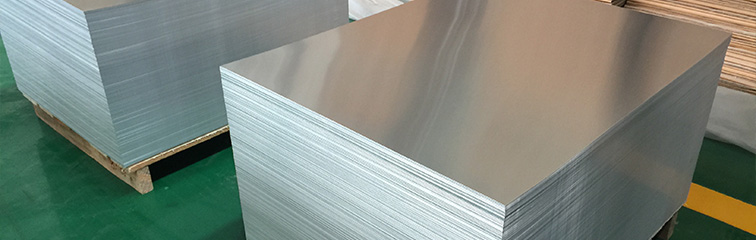
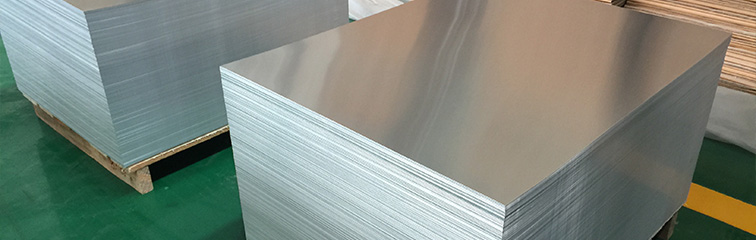
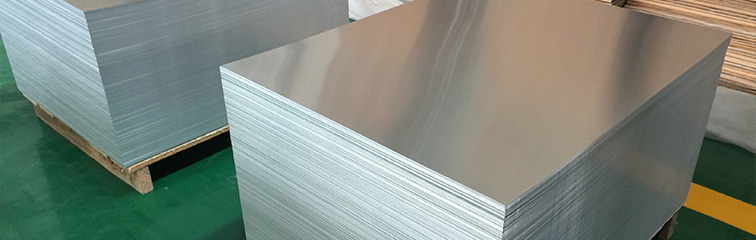
When a plant wants to handle degreasing, chromating, coating, or printing in its own facility, uncoated Plain Aluminum closure stock can be a practical starting material. For plants without coating equipment, pre-coated or pre-printed coil is usually easier to run.
| Cap type | Common alloy | Typical thickness range | Common temper |
|---|---|---|---|
| PP cap for water or beverage | 8011, 3105 | 0.18-0.25 mm | H14, H16, H18 |
| ROPP cap for spirits or wine | 8011, 3105 | 0.20-0.30 mm | H14, H16, H24 |
| Pharmaceutical vial seal | 8011 | 0.18-0.23 mm | H14, H16 |
| Deep drawn closure | 8011, 3105 | 0.23-0.35 mm | H14, H24 |
Yes. The difference is not only the alloy name. Aluminum closure stock is made for high-speed blanking, drawing, knurling, threading, perforating, and sealing. Ordinary sheet may look similar, but it may not provide the same coating adhesion, burr control, flatness, or elongation.
Cap stock normally needs stable thickness tolerance across the full coil width. A small thickness swing can change forming pressure, affect thread definition, or cause uneven sealing force. Surface cleanliness also matters. Oil stain, scratch lines, black spots, and poor pretreatment can lead to coating peel or visible defects after printing.
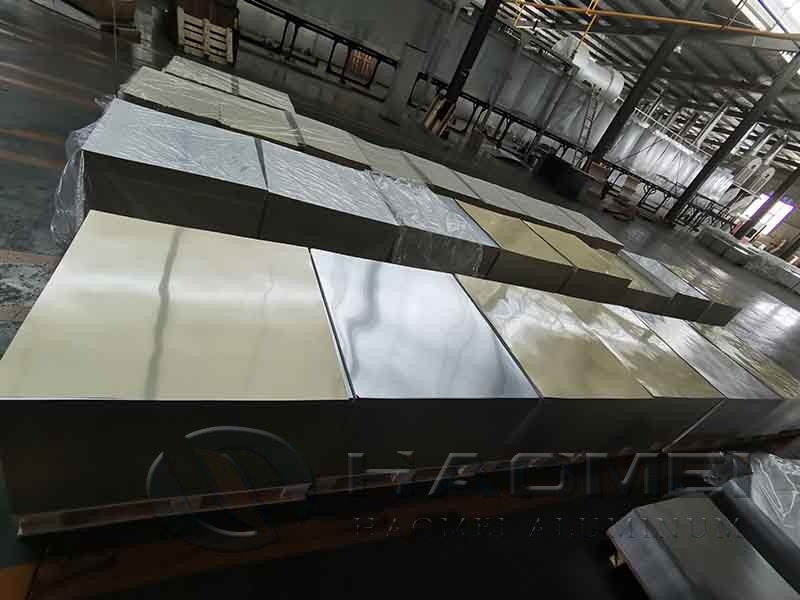
For closure production, mills and processors usually pay close attention to these items:
| Quality item | Why it matters in cap making | What to check before production |
|---|---|---|
| Thickness tolerance | Controls cap height, sealing pressure, and tooling stability | Measure head, middle, and tail of coil |
| Surface cleanliness | Affects lacquer and ink adhesion | Check for oil stain, oxidation, and roll marks |
| Mechanical properties | Determines cracking risk and forming feel | Test tensile strength and elongation |
| Flatness | Helps feeding and printing registration | Inspect wave, camber, and coil set |
| Coating curing | Prevents peel, odor, and low adhesion | Run MEK rub, adhesion, and boiling tests |
There is no single temper for every cap. The right choice depends on cap diameter, skirt height, thread design, bridge design, liner type, and capping torque. A shallow beverage cap may run well with thinner H16 or H18 material, while a taller ROPP cap for spirits may need a different combination of thickness and temper to prevent skirt cracks.
As a practical reference, H14 and H16 are often selected when the cap needs better drawing performance. H18 gives higher hardness and shape retention but needs more careful tooling and lubrication. H24 can be useful where partial annealing gives a balance between strength and ductility.
If the cap plant is changing from plastic caps to aluminum caps, thickness should not be copied blindly from another product. Aluminum cap forming depends on blank diameter, reduction ratio, redraw depth, and sidewall stress. A small increase from 0.22 mm to 0.24 mm may improve stiffness, but it can also increase forming load and tool wear.
For sampling, many teams start with Plain Aluminum to evaluate forming first, then move to coated or printed coil after cap dimensions are stable.
Yes, pre-painted and printed aluminum closure sheet can go directly to blanking and forming if the coating system is designed for the cap process. This is common for wine, spirits, beverage, food, and pharmaceutical closures. However, printing quality alone is not enough. The coating must tolerate punching, drawing, rolling, knurling, and capping.
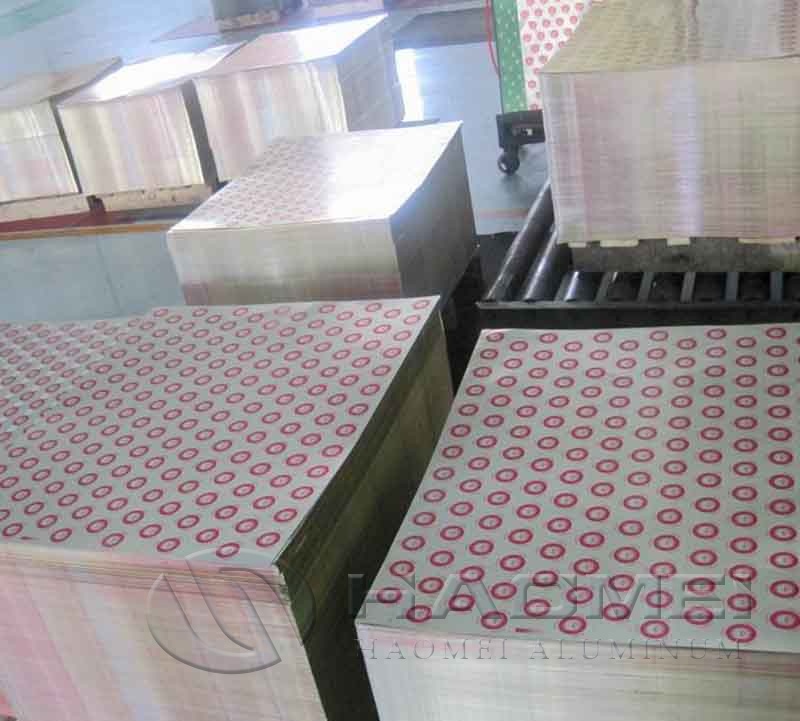
The inside coating is especially important because it may contact a liner, food, beverage, medicine, or vapor. The outside lacquer and ink must resist scratching during feeding and forming. If the cap will be pasteurized, sterilized, or exposed to alcohol, the coating should be tested under similar conditions before volume production.
| Printed or coated item | Typical check | Common risk if ignored |
|---|---|---|
| Outside lacquer | Adhesion and scratch resistance | Printing damage during forming |
| Inside lacquer | Food contact or product compatibility | Odor, corrosion, or liner reaction |
| Ink layer | Color stability and registration | Brand color variation |
| Curing level | Solvent resistance and flexibility | Peel after deep drawing |
| Lubricant compatibility | Smooth stamping and forming | Drag marks or coating lift |
Most cap defects come from a combination of material and process factors. If cracks appear at the skirt, the material may be too hard, the drawing ratio may be too aggressive, or lubrication may be insufficient. If earring appears after drawing, the coil may have directional properties that are not matched to the forming route. If coating peels, pretreatment, curing, or forming strain should be checked.
A useful trial should record coil number, alloy, temper, thickness, coating type, forming speed, lubricant, tool clearance, and defect position. This makes it much easier to separate material issues from machine settings. For example, cracks at the same height around the cap often point to forming stress, while random scratches may come from feeding, dust, or worn tooling.
Before placing repeat orders, request a specification sheet that includes alloy, temper, thickness tolerance, width tolerance, coating type, coating weight, mechanical properties, inner diameter, outer diameter, and packaging method. Coil edge quality is also important because poor slitting can create burrs that affect blanking knives and cap appearance.
A stable aluminum closure stock order is built around real cap drawings, real tooling conditions, and real filling requirements. The most reliable way to choose aluminum bottle cap material is to test the exact cap size, liner, capping torque, and storage environment instead of selecting alloy and temper by name only.
Tags: Aluminum closure stock | aluminum bottle cap material | aluminum cap stock | ROPP cap aluminum | PP cap aluminum |
Original Source: http://alclosuresheet.com/a/aluminum-closure-stock.html

+86-15978414719


+86-15978414719


sale@alumhm.com